
Last updated November 25, 2026
 Sweep & inspection
 Caps & crowns
 Flue relining
 Masonry repair
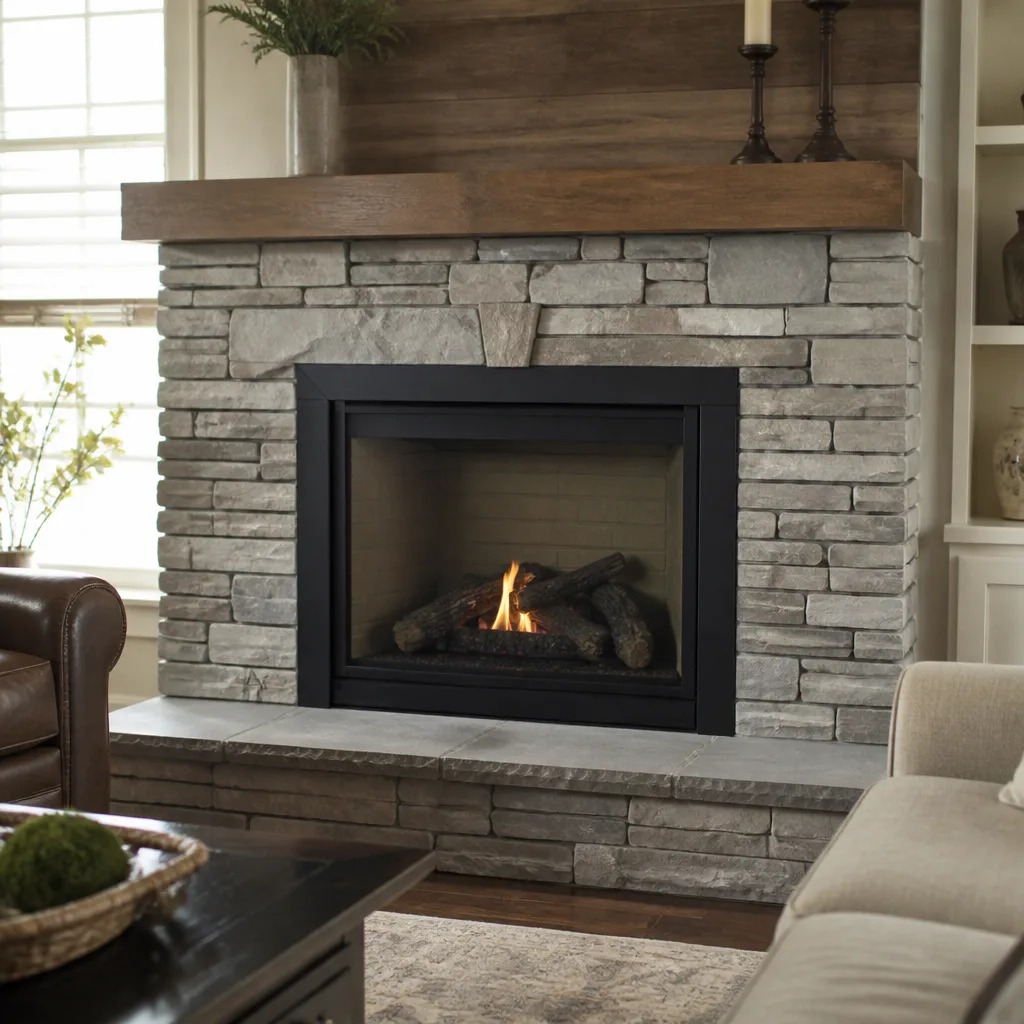 Gas fireplace service
Level 1 sweep and inspection to the NFPA 211 annual standard - flue, crown, cap, and flashing checked and photographed
Chimney sweep logs do not sweep chimneys. They loosen some creosote - which then falls where a brush and vacuum still have to collect it.
Seasonal Chimney Cleaning Care for Broomfield: Year-Round Homeowner’s Guide
Most chimney damage in Broomfield doesn’t happen during the burn season. It happens in April and May, when snowmelt saturates uncapped or cracked masonry and almost nobody is paying attention. By the time the weather turns cold again and you strike that first match, the damage is already done and the repair bill has already been written. The problem is that most chimney advice is built around a national template that assumes one long winter and one short summer. Broomfield doesn’t work that way. Our climate swings hard between dry, windy springs, hail-driven summer storms, golden fall afternoons, and freeze-thaw winters that punish masonry. Each of those seasons puts a different kind of stress on your chimney, and each one calls for a different set of tasks. This guide maps a full twelve-month care calendar to the conditions your chimney will actually face in Broomfield, so you’re working with the weather instead of reacting to it.
Quick Answer
Seasonal chimney care in Broomfield means matching specific tasks to each of the four seasons rather than just sweeping before winter. Fall calls for a sweep, inspection, damper check, and cap confirmation before the first fire. Winter wants mid-season monitoring for creosote buildup and draft changes. Spring is the critical window for catching moisture damage at the crown, flashing, and masonry. Summer is when wildlife intrusion and storm damage get addressed. A full sweep and inspection once a year, ideally in late summer or early fall, anchors the whole schedule.
Styles & brands we work with
- Sweep & inspection
- Caps & crowns
- Flue relining
- Masonry repair
- Gas fireplace service
Table of Contents
- Why Broomfield’s Seasons Change What Your Chimney Needs
- Fall: What to Confirm Before the First Fire
- Winter: Mid-Season Signs You Need a Second Look
- Spring: Post-Melt Inspection Priorities
- Summer: Wildlife, Storms, and Cap Specification
- Building a 12-Month Chimney Calendar for Broomfield
- Neighborhood Notes: How Local Housing Shapes Chimney Care
- When Seasonal Care Isn’t Enough
Why Broomfield’s Seasons Change What Your Chimney Needs
A chimney is a masonry and metal structure exposed to weather on all six sides – top, bottom, and four walls. That means every seasonal shift in temperature, moisture, and wind loads it differently. In Broomfield, sitting between the Flatirons and the plains, those shifts come with real teeth. Winter nights drop well below freezing, then daytime sun warms south-facing masonry back above it. That freeze-thaw cycle is the single most destructive force on a chimney in this region, and it repeats dozens of times per season.
Spring brings heavy, wet snow followed by rapid melt. If the crown is cracked or the flashing has separated, that meltwater goes straight into the masonry, where it freezes again the following night and pries the structure apart from the inside. Summer storms arrive fast, often with hail and horizontal wind-driven rain that finds every gap in the cap and crown. And fall, ironically the season homeowners think about most, is when the burn season starts and the creosote from an unswept flue becomes a real fire hazard.
What this means practically is that chimney care isn’t a single annual event. It’s a rhythm. The tasks you do in April are different from the ones you do in October, and skipping either one leaves a vulnerability that the next season will exploit. We’ve watched this play out in Broomfield homes year after year, and the pattern is remarkably consistent: the chimneys that fail are almost always the ones where seasonal care lapsed at the transition points, not in the middle of the burn season.
The Four Stress Conditions
- Spring melt: water intrusion through failed crowns, cracked masonry, and separated flashing
- Summer storms: hail damage, wind-driven rain, wildlife nesting in open flues
- Fall transition: accumulated creosote meeting the first sustained fires
- Winter freeze-thaw: cyclical expansion and contraction of saturated masonry, plus heavy burn-season loads
Each of the eight sections below addresses one of these conditions with specific, doable tasks. The goal isn’t a perfect chimney – it’s a chimney whose weak points get caught in the season they’re most likely to fail, not the season they finally break.
Fall: What to Confirm Before the First Fire
Fall is the season homeowners think about chimney care, and rightfully so – it’s the last chance to catch problems before the burn season begins. But most people’s fall checklist stops at “get it swept.” A useful pre-season check covers four things: the sweep itself, the inspection, the damper, and the cap.
Start with the sweep. Creosote accumulates throughout the burn season and sits in the flue all summer. By the time you’re ready to light the first fire, that creosote has had months to harden into a brittle, glossy glaze that’s harder to remove and more flammable than the fresh deposit. A proper chimney sweep before the first fire removes it and gives the technician a clean look at the flue interior. That clean look is what makes the inspection meaningful – you can’t diagnose what you can’t see.
Next comes the inspection. A Level 1 inspection covers the readily accessible portions of the chimney, firebox, and vent system, which is fine for a chimney in known-good condition and in regular use. A Level 2 inspection is more thorough and is the standard for a chimney that’s had a change in appliance, a chimney fire, a new home purchase, or any suspected issue. If you’ve never had the chimney inspected, this is the year to start.
Pre-Season Checklist
- Sweep the flue to remove accumulated creosote before it hardens further
- Inspect the flue, firebox, and vent system for cracks, gaps, and deteriorated joints
- Test the damper – it should open freely, seal completely, and stay in the open position without dropping
- Confirm the cap is intact and properly fitted over the flue opening
- Do a draft test with a small starter fire to confirm smoke pulls up the flue instead of backing into the room
- Check the crown for visible cracks or deteriorated mortar
Draft matters more than people think. A cold flue in fall can be hard to start, and a damper that doesn’t open fully or a flue with obstruction from a summer nest can produce persistent smoky backdrafting. If the fire is fussy from the first lighting and stays that way after the flue warms up, that’s a signal worth investigating before you start burning regularly.
Timing Your Fall Service
Here’s a reality that catches a lot of Broomfield homeowners: October is the busiest month in the chimney trade. Everyone waits until they feel the first cold snap, then calls. The result is a crunch, and people who call late get booked later than they intended. If your chimney was swept last year and you’ve been burning regularly since, the smarter move is to schedule the sweep and inspection in late summer or early September. That gets you onto the calendar without a scramble, gives you time to address anything the inspection finds before burn season, and leaves October for the people who genuinely forgot. It’s not an emergency if you plan it six weeks early.
Winter: Mid-Season Signs You Need a Second Look
Once the burn season is underway, most homeowners switch the chimney off their mental list entirely and just enjoy the fire. That works, right up until it doesn’t. The mid-season check isn’t about doing a full sweep – it’s about watching for the handful of signs that say the chimney needs attention before spring.
The biggest variable is burn frequency. A homeowner who lights a fire a couple of times a week produces creosote far more slowly than someone who burns every night, and someone who burns green or unseasoned wood produces it faster still. There’s no single number that works for every chimney, but in our experience a flue that sees regular, frequent fires over the course of a season can accumulate enough creosote to justify a mid-season sweep before spring, especially if the wood hasn’t been well seasoned.
Signs a Mid-Season Look Is Warranted
- Odor changes: a stronger, sharper, or more acrid smell from the fireplace when it’s not burning suggests creosote buildup or a draft issue
- Draft degradation: a fire that used to draw strongly now struggles, smokes at the glass, or backs up when you open the door
- Visible soot: black buildup on the fireplace glass or on the firebox walls that appears faster than usual
- Wood consumption: if you’re burning noticeably more wood for the same heat, an obstructed or creosote-loaded flue may be the cause
- Popping or rumbling sounds: any unusual sound from the flue during a fire warrants a stop and a professional look before you light again
The mid-season sweep exists for the heavy burners. If you’ve been burning nearly every night for a couple of months and your wood has been more green than seasoned, a sweep now means the spring burn season doesn’t start on top of a loaded flue. If you’re a light burner with well-seasoned wood, you can usually wait for the fall service – and a qualified technician will tell you that straight instead of pushing a sweep you don’t need.
The Firebox and Glass
Winter is also when fireplace doors and glass take the most wear. A gas fireplace insert running regularly will soot up its glass if the burner or the logs are out of adjustment, and a wood fireplace will build up deposits that dull the fire view. That’s a fireplace repair question, not a sweeping one – adjusting the burner, checking the gas log set, and replacing failed glass are repairs that belong in the winter check instead of the fall sweep. If your fireplace is a gas insert rather than a wood-burner, the seasonal calendar shifts: you still want the vent inspected, but the sweeping rhythms and creosote concerns change with the fuel.
If a fire ever roars unexpectedly, makes a deep rumbling noise, or produces a smell of hot metal accompanied by visible sparks, stop burning and call a professional before lighting another fire. Chimney fires can go unnoticed inside a flue, and a chimney that’s had one needs a proper inspection before it’s used again.
Spring: Post-Melt Inspection Priorities
This is the season most homeowners miss, and it’s the season that matters most for long-term chimney health in Broomfield. Once the snow is off the roof and the ground is warming, the chimney’s exterior has just survived months of freeze-thaw cycling and snowmelt saturation. What you do in April and May determines how much of that damage gets caught and fixed before summer storms add to it.
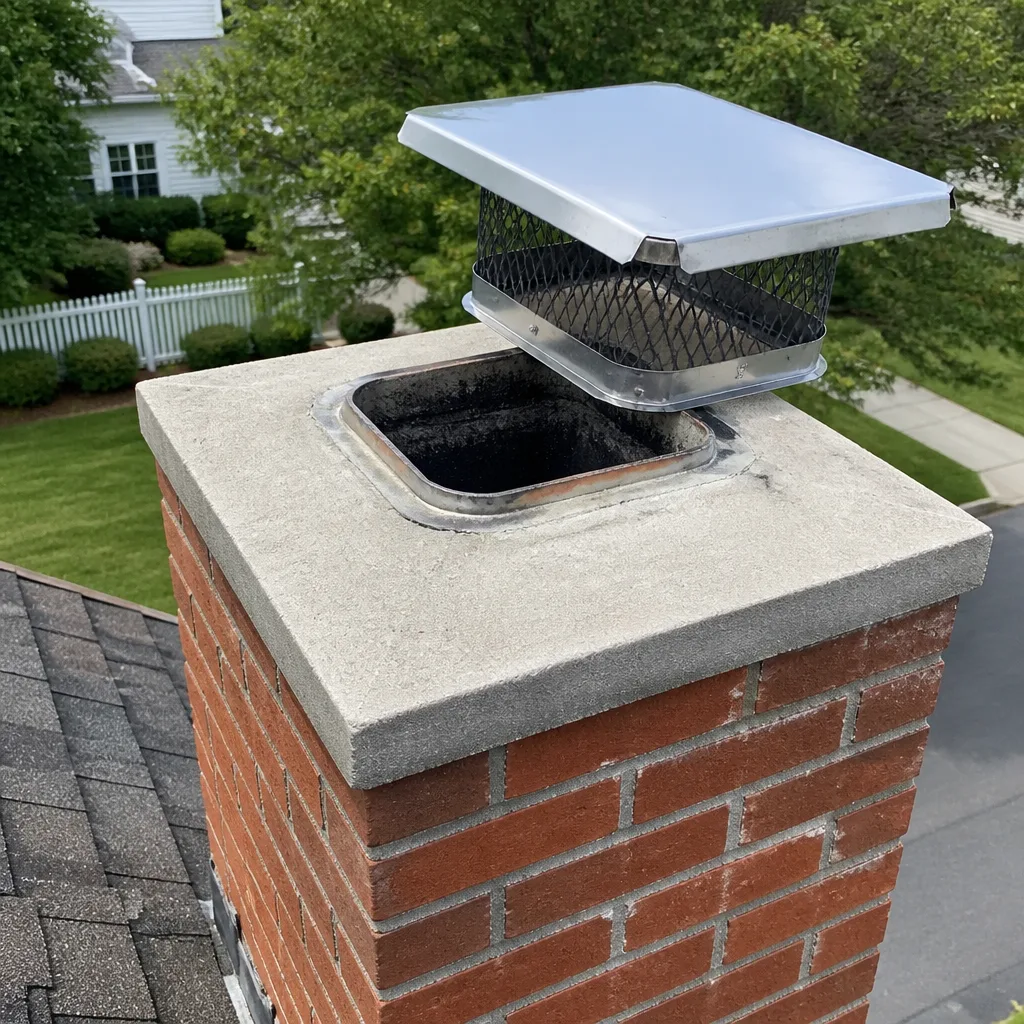
The first priority is the crown – the concrete or masonry cap at the top of the chimney that sheds water away from the flue. Crowns crack, and a cracked crown is a direct path for water into the masonry below. Spring is when those cracks are most visible and most damaging, because the meltwater from the last snows has just finished flowing into them.
Spring Exterior Inspection Priorities
- Crown: look for hairline or open cracks, missing chunks, or a crown that’s pulling away from the flue tile
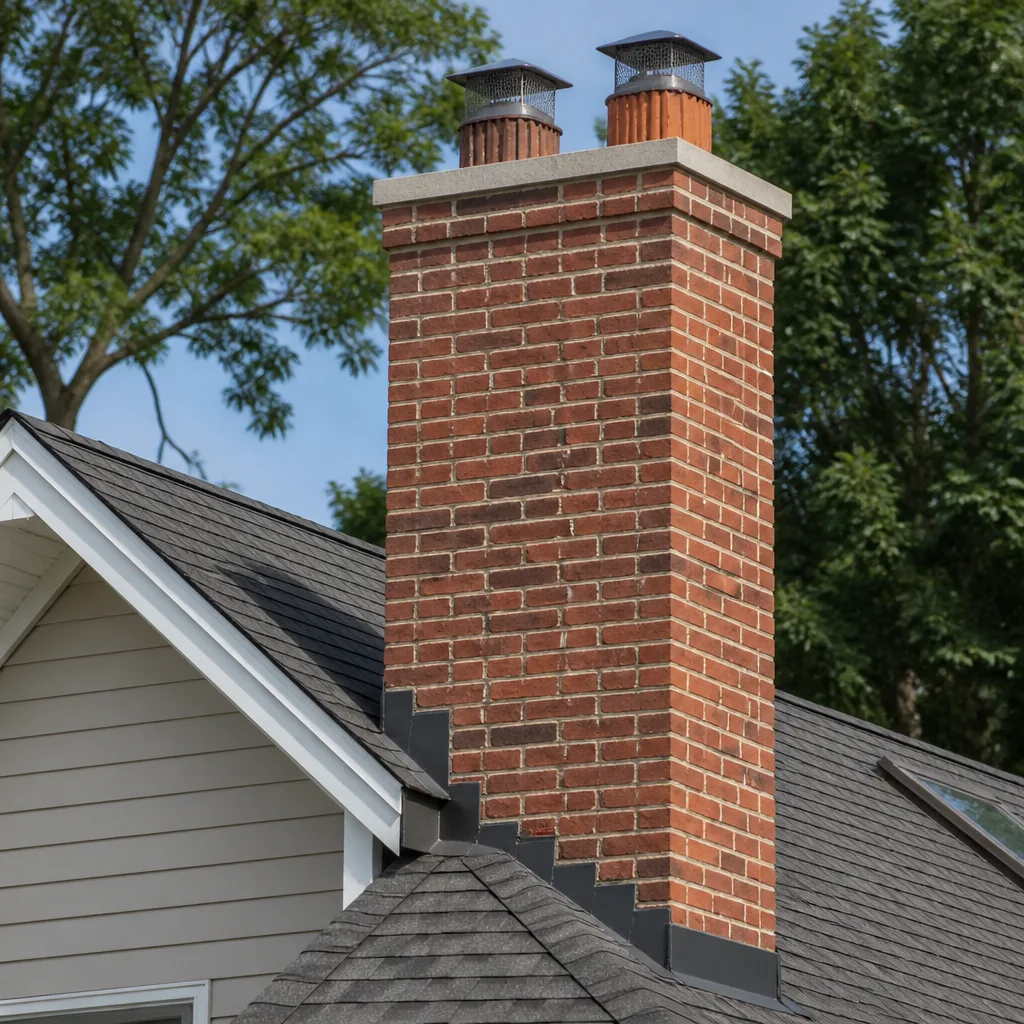
- Flashing: the metal that seals the chimney to the roof – check for separation, lifting, failed sealant, or rust
- Masonry joints: look for crumbling, recessed, or missing mortar between bricks
- Efflorescence: the white, powdery staining on masonry that signals moisture moving through the brick
- Spalling: brick faces that are flaking, peeling, or popping off, a sign of saturation and freeze damage
- Cap and screen: confirm the cap is still seated and the spark screen is intact after winter storms
Efflorescence deserves a specific note because so many homeowners mistake it for harmless staining. That white powdery bloom on brick or mortar is the visible end of a moisture pathway: water has entered the masonry, dissolved salts from the brick and mortar, and then evaporated at the surface, leaving the salt behind. It’s a moisture indicator, not a cosmetic issue. Where you see efflorescence, water is getting in somewhere – through the crown above, through failed flashing, or through saturated masonry at a joint. Finding the source in spring, before summer sun bakes the moisture deeper and the next winter freeze pries it apart, is what limits the damage.
Why April and May Matter
Snowmelt is a slow, sustained moisture load. Unlike a rainstorm that runs off quickly, melting snow sits against the chimney for days or weeks, giving water the time it needs to work into every crack. If the crown is cracked and the flashing has separated, April is when the interior of the masonry gets thoroughly wet. The first warm night that drops back below freezing turns that moisture into expanding ice, and the cycle begins. Catching it in spring means one repair now instead of masonry reconstruction later. The spring inspection is also the natural time to schedule any chimney repair so the work is done in good weather and everything is sound well before fall.
Summer: Wildlife, Storms, and Cap Specification
Summer is the season when the chimney sits unused, which is exactly why wildlife and weather get the chance to move in. A chimney with no cap is, from a bird’s perspective, a perfectly shaped nesting cavity. From a raccoon’s, it’s a dry, warm den. And from a storm’s, it’s a rain funnel. Summer care is about keeping all three out.
Colorado Wildlife That Uses Chimneys
The species that get into Colorado chimneys are consistent from year to year. Chimney swifts are the most common, arriving in spring and nesting in uncapped flues through summer, and their nests are protected once they’re established. Starlings are aggressive cavity nesters and will fill a flue with nest material fast. Raccoons are strong climbers and will take up residence in an open chimney or in the smoke shelf area, and their presence creates both an obstruction hazard and a sanitation problem. Squirrels are frequent visitors too, especially in mature trees near the roofline.
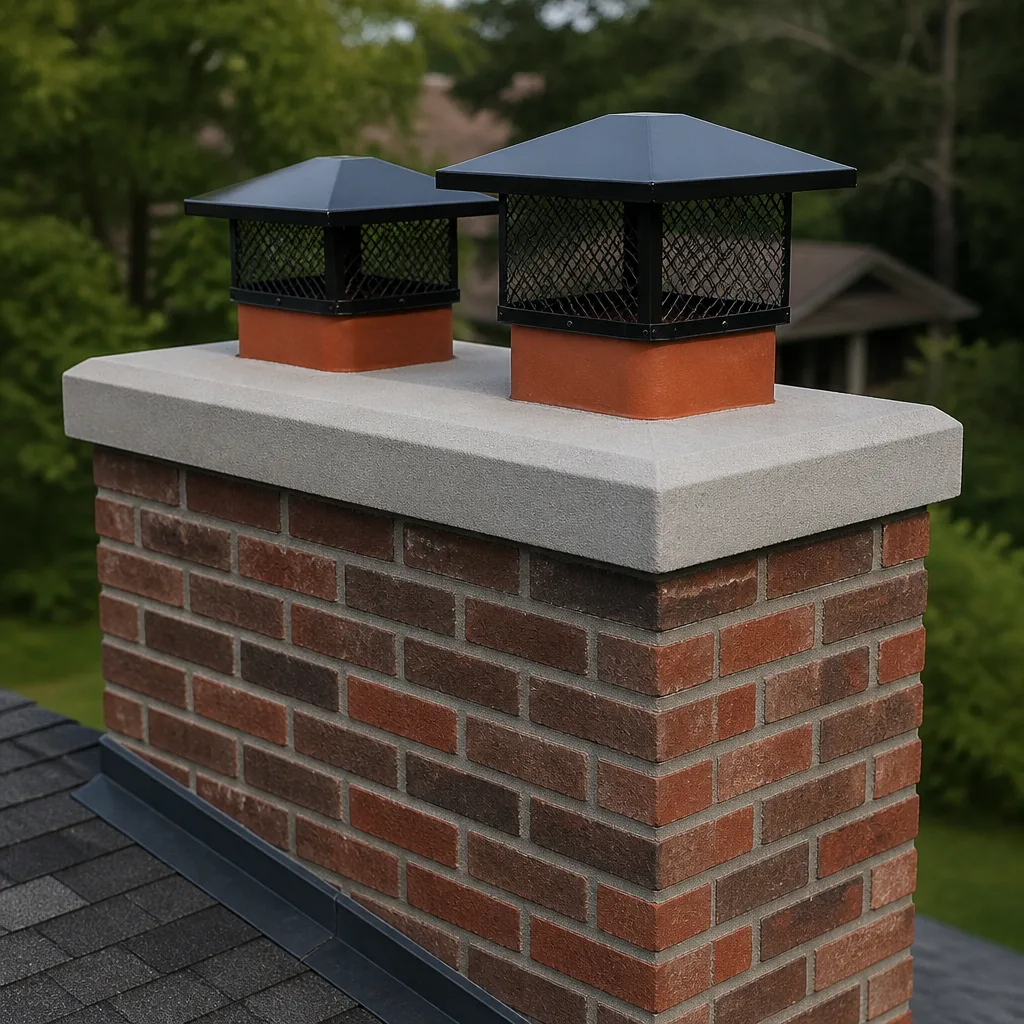
The solution is a properly fitted chimney cap. A cap is a metal hood with screened sides that sits over the flue opening, letting smoke out while keeping animals, rain, and debris in the chimney’s path. The critical detail is fit: a cap that’s too loose or not secured to the flue or crown will blow off in wind or be pushed aside by a determined animal. A cap that’s sized correctly, mounted securely, and matched to the flue and crown geometry does the job reliably.
Cap specification also matters for corrosion and weather resistance. Cheap galvanized caps rust out in a few seasons of Colorado weather; stainless and copper caps last far longer, especially at altitude where UV and temperature swings are severe. Copperfield and Famco are among the cap and component brands we work with, and they hold up under the conditions Broomfield chimneys actually face.
Summer Storm Checks
- Hail: inspect the cap, crown, and any exposed metal for dents, cracks, and loosened fasteners after a major hail event
- Wind: check that the cap is still seated and the spark screen is intact after high-wind storms
- Water intrusion: look for water staining inside the firebox or on the smoke shelf after heavy rain – it points to a cap or crown leak
- Masonry: check for new cracks or spalling that appeared during the storm season
A chimney cap and crown specialization is worth calling out because these two components are where the majority of water intrusion begins. Fix the cap and crown and you’ve eliminated the source of most moisture damage in the chimney – which is a far better use of money than repairing masonry damage the water caused.
Building a 12-Month Chimney Calendar for Broomfield
A national-template calendar tells you to sweep in fall and forget the chimney the rest of the year. That template doesn’t account for Broomfield’s actual weather, which is why the calendar below is built around the local seasons instead. Each month or season has a specific task, and the tasks stack into a full year of coverage.
The Broomfield Chimney Calendar
- Late winter (February-March): mid-season monitoring – watch for draft changes, odor shifts, and soot buildup; schedule a mid-season sweep if you’re a heavy burner
- Early spring (April): post-melt exterior inspection – crown, flashing, masonry joints, efflorescence, and spalling
- Late spring (May): complete any chimney repair identified in spring inspection before summer storms
- Early summer (June): cap inspection and confirmation – make sure the cap is intact, seated, and screened before wildlife nesting peaks
- Mid summer (July): storm response – inspect after any major hail or wind event
- Late summer (August-September): full sweep and Level 1 or Level 2 inspection – the year’s anchor service, booked before the fall crunch
- Fall (October): damper test, cap confirmation, and draft test before the first fire; complete any repairs the inspection flagged
- Early winter (November-December): first-fire draft confirmation and firebox/glass check
Notice that the annual sweep lands in late summer, not October. That’s deliberate. The chimney is clean and inspected going into the burn season, and the October slot stays open for the people who didn’t plan. You’re also using the shoulder season – when the chimney isn’t in active use – for any repair work the inspection uncovers, which is far easier than trying to schedule repairs mid-winter.
The calendar shifts slightly for a gas fireplace. Gas inserts don’t produce creosote the way wood fires do, so the sweeping rhythm is less frequent, but the vent inspection, glass soot check, and annual service remain on the schedule. A gas appliance also has a different set of components to inspect – the burner, logs, and safety shutoff – so the spring inspection is a good time to have those looked at alongside the chimney itself.
Neighborhood Notes: How Local Housing Shapes Chimney Care
Not every chimney in Broomfield faces the same conditions. The housing stock and the specific micro-climate across the city shape what each chimney needs, and it’s worth knowing which category yours falls into.
In the older parts of Broomfield, masonry chimneys with original brick and mortar are common, and those chimneys are the ones most affected by efflorescence, spalling, and moisture intrusion. Older crowns are more likely to have cracked, and older flashing more likely to have separated. These chimneys benefit most from the aggressive spring inspection and from Chimney Sweep Broomfield services that catch water damage before it reaches the masonry interior.
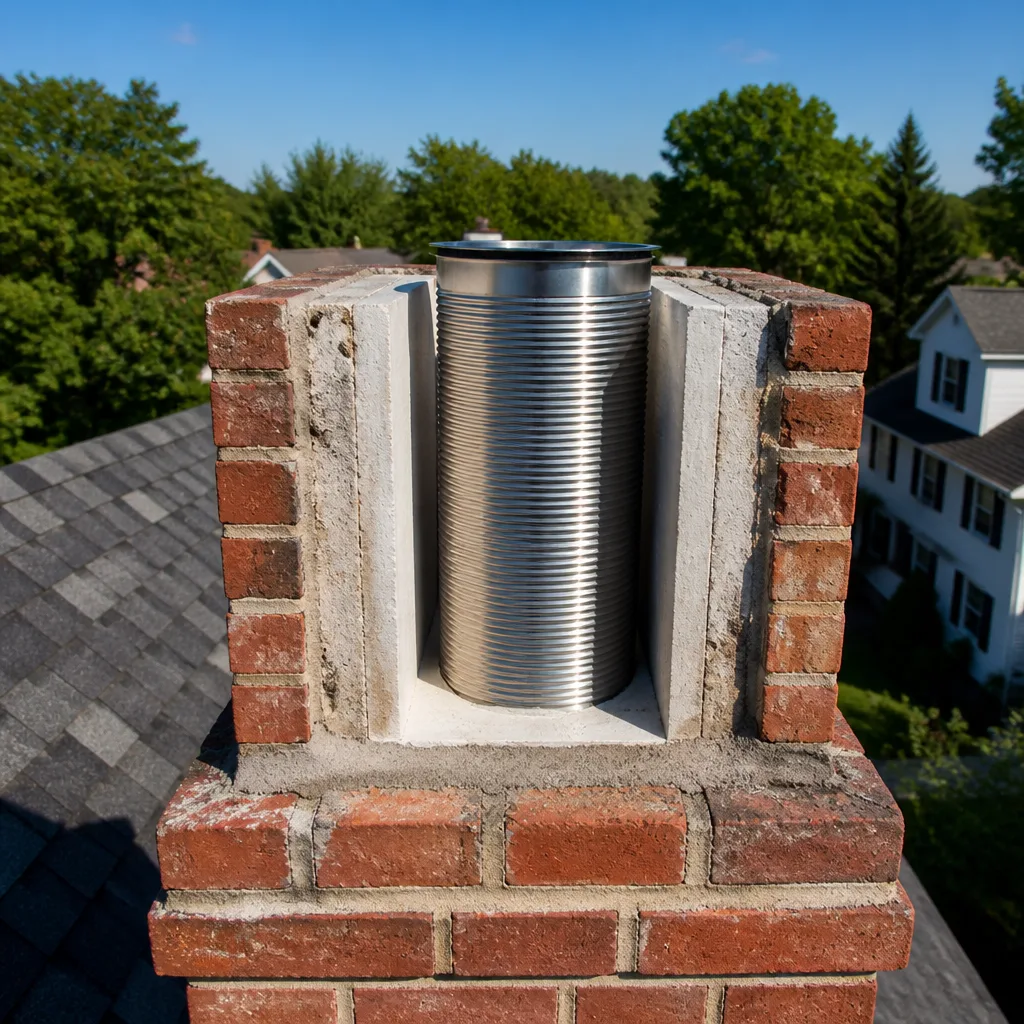
In the newer developments, factory-built and metal chimneys are more common. These don’t have the same masonry moisture issues, but they have their own seasonal concerns: the venting and terminations can be affected by wind loads, the caps are often simpler and more easily damaged by hail, and the flue liners need inspection for the kind of deterioration that’s specific to metal systems. A HeatShield ceramic flue resurfacing service is often able to restore the liner without a full reline, which is a repair path masonry-only contractors can’t offer.
Along the western edge of Broomfield, closer to the foothills, wind exposure is greater and the temperature swings between day and night can be more extreme. Those chimneys see more wind-driven rain and hail than the eastern parts of the city, so storm checks and cap security matter more. On the eastern side, toward the plains, the conditions are a bit drier but the wind is still a factor, and the spring melt behavior is the same.
The main takeaway is that the calendar above applies everywhere in Broomfield, but the specific priorities shift with the housing and the micro-climate. A chimney on a 1970s brick ranch has a different spring checklist than a chimney on a 2010s build with a factory-built system. Knowing which one you have is the first step to knowing what to check.
When Seasonal Care Isn’t Enough
Most of what’s in this guide a homeowner can do themselves: the spring visual inspection, the cap check, the damper test, watching for mid-season signs. But there’s a line where seasonal care hands off to a professional, and crossing it with a trained technician is what keeps the whole system safe.
Call a professional when the inspection reveals problems you can’t fix yourself – cracks in the crown, separated flashing, deteriorated masonry, a liner that needs repair or replacement. Call when you’ve never had the chimney inspected and don’t know its history, since you can’t diagnose what you can’t see and a full inspection establishes the baseline. Call when the mid-season signs point to more than a routine cleaning, when a fire has behaved strangely, or when you need a repair you can trust – a HeatShield liner restoration, a DuraFlex reline, or a full cap and crown rebuild. And call when you need the work done right by a team that can handle inspection, cleaning, and repair together, so findings don’t sit unresolved while you chase a second contractor.
Chimney Sweep Broomfield offers free estimates in Broomfield – call (833) 513-8675. We answer 24/7. Fast dispatch from 7am to 7pm, Sunday through Friday. Our technicians have up to 8 years of experience, and we work with professional-grade brands including Famco, Copperfield, DuraFlex, and HeatShield. We inspect it, we repair it – same team, same standard.
Common Mistakes to Avoid
- Only thinking about the chimney in the fall. Fall is when you notice it, but spring is when the damage happens. A chimney that gets a fall sweep but no spring inspection misses the season that actually threatens its structure.
- Assuming a cap isn’t important. The cap and crown are the chimney’s first line of defense against water intrusion. Skipping the cap to save money on the installation is the most expensive decision in chimney care, because it invites the damage you’ll pay for later.
- Burning unseasoned wood in Broomfield’s freeze-thaw climate. Green wood produces more creosote and less heat, which means more frequent sweeps and more buildup in the meantime. Season your wood properly and you’ll get a cleaner burn and better heat.
- Mistaking efflorescence for harmless staining. The white powder on masonry is a moisture indicator. Treat it as a symptom to diagnose, not a cosmetic issue to scrub off.
- Scheduling the fall sweep in October. The busiest month in the trade means later appointments and less time to fix what the inspection finds. Book in late summer or September instead.
- Ignoring the cap after summer. Wildlife nesting peaks in early summer. By the time you notice a bird or a raccoon, the flue is already compromised – and chimney swifts may be protected once they’re established, complicating removal.
- Letting a quick sweep substitute for an inspection. A sweep removes creosote; it doesn’t diagnose the flue. A cleaning without an inspection is half of the job.
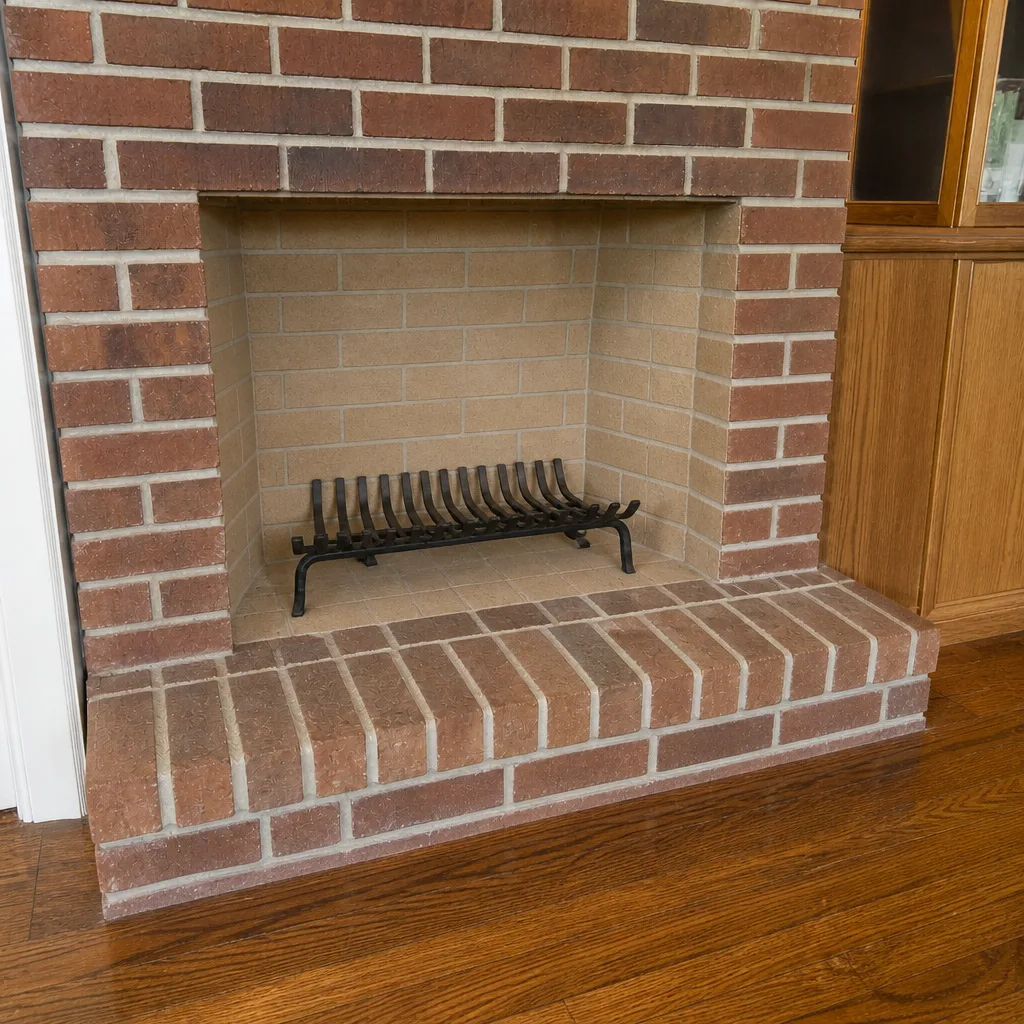
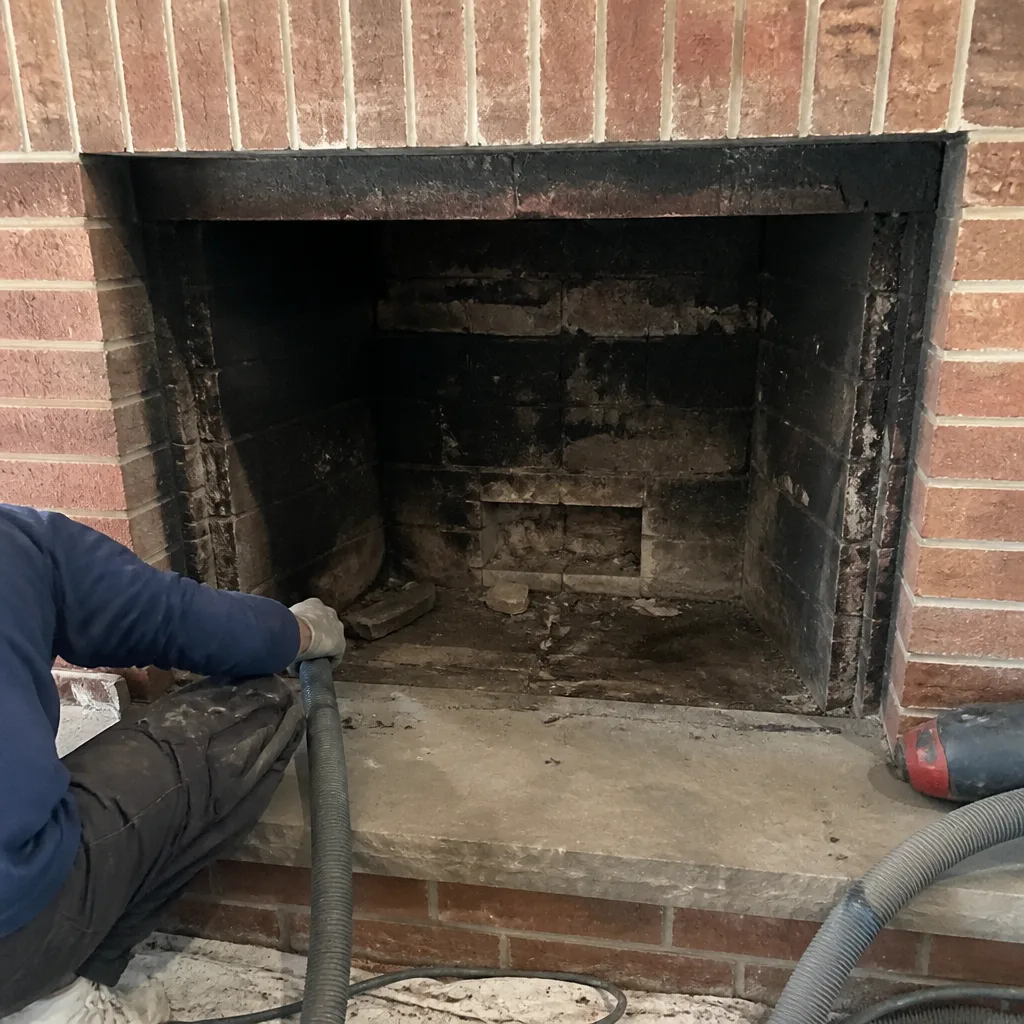
See the difference
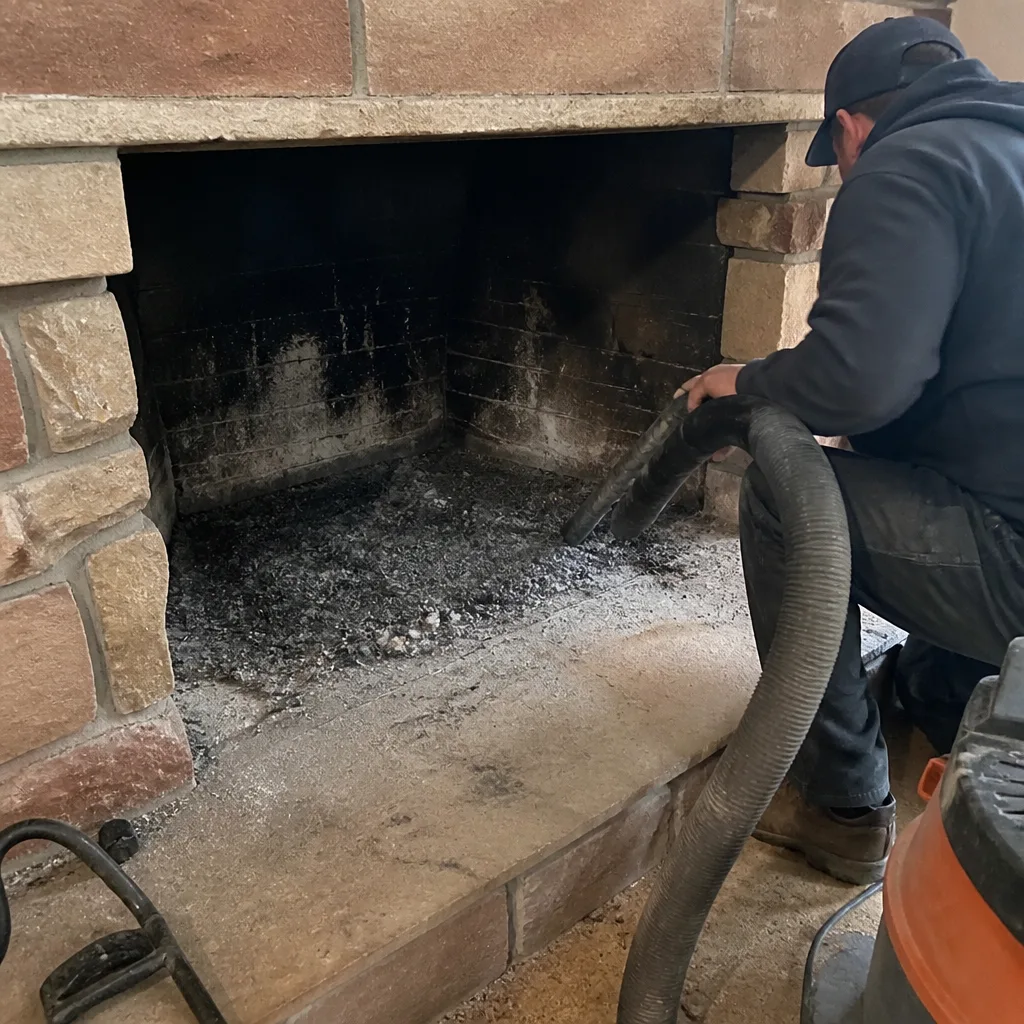 Before
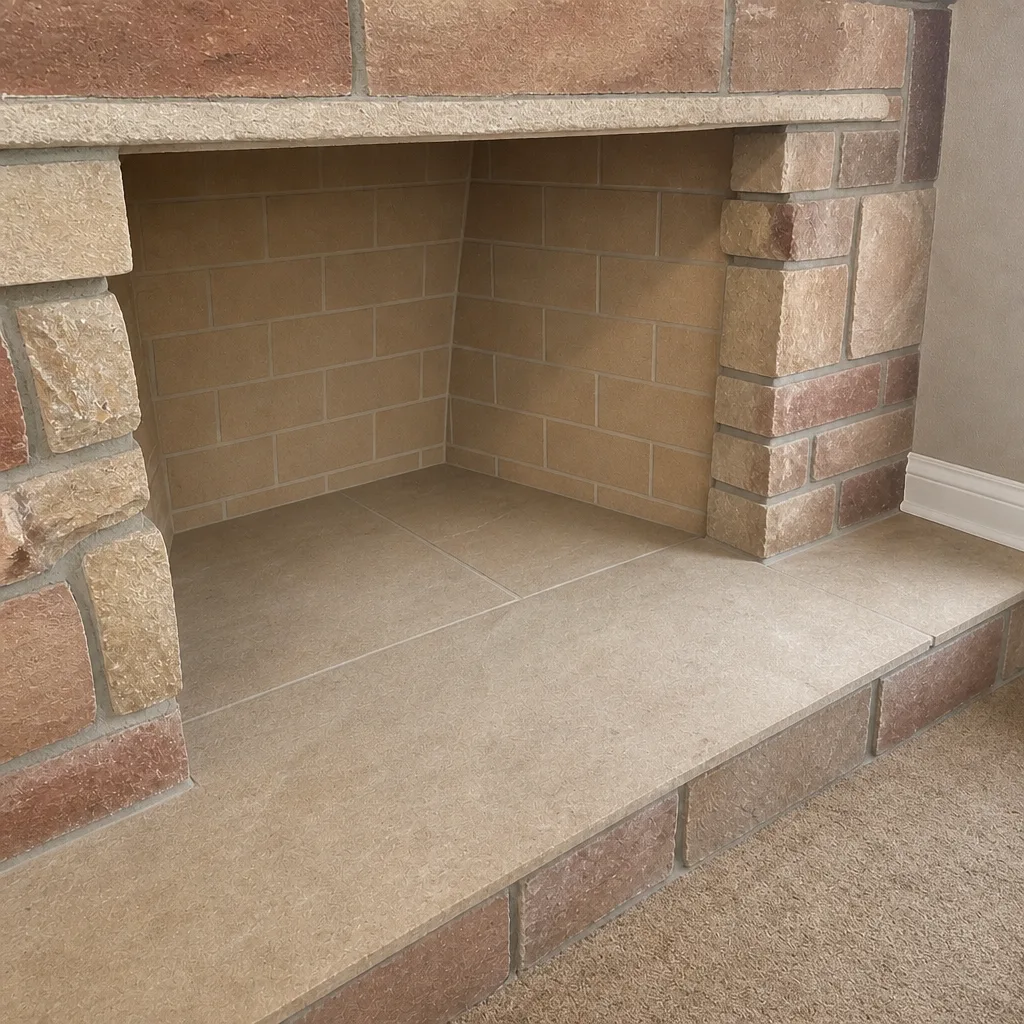 After
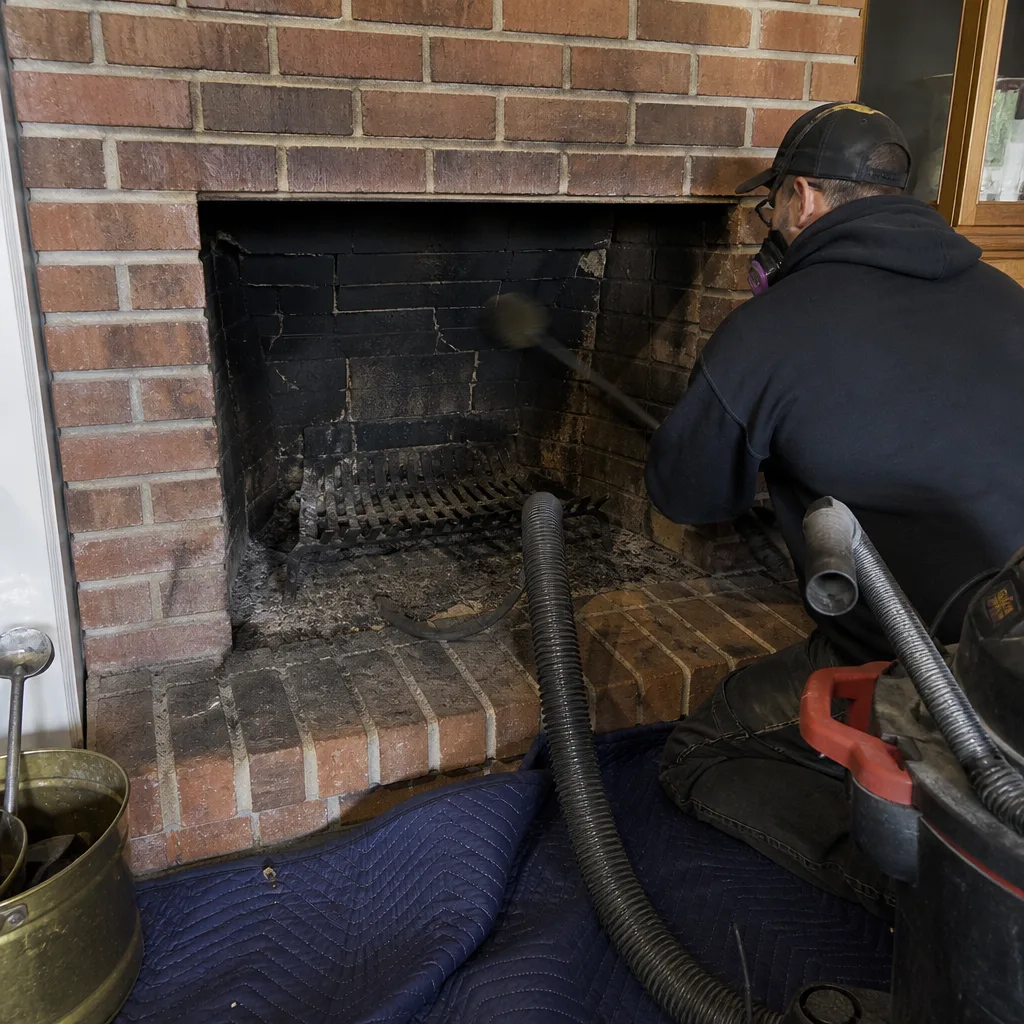 Before
 After
 Before
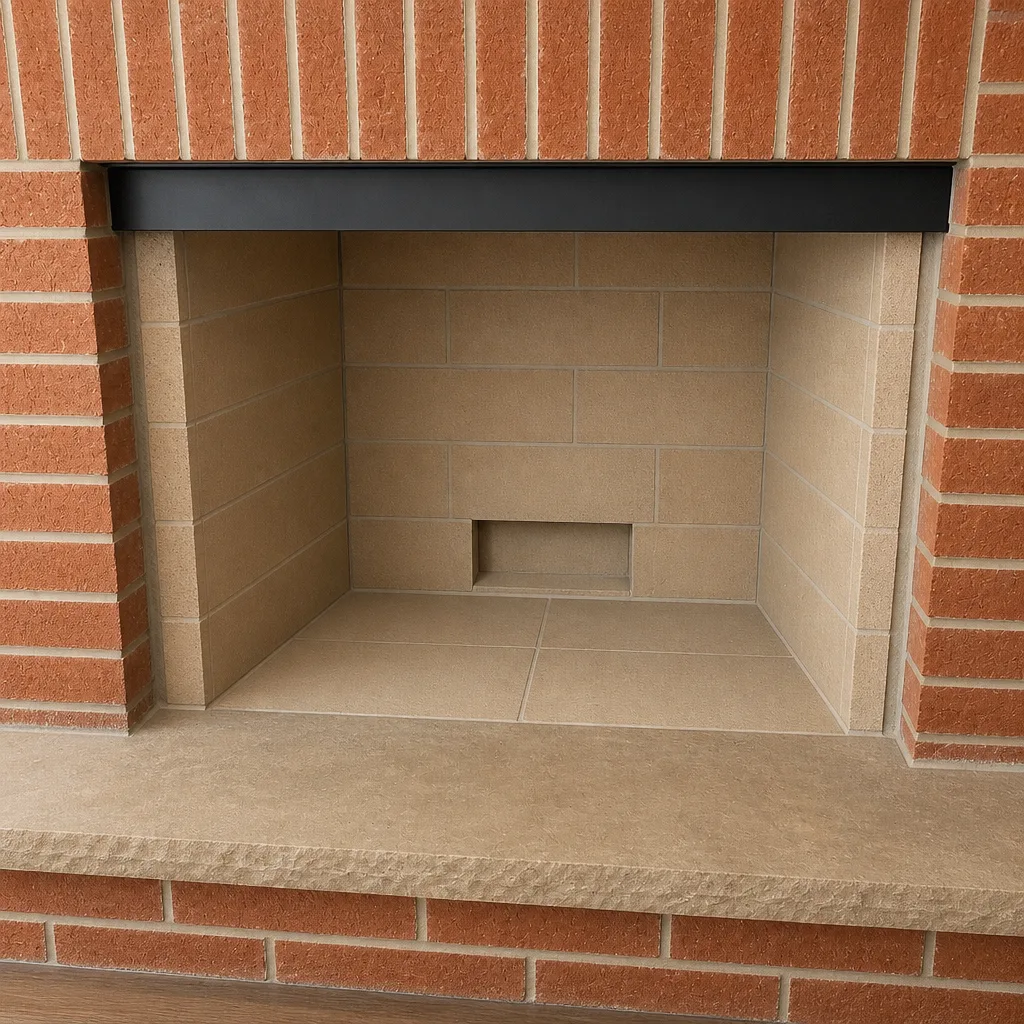 After
When to Call a Professional
Some scenarios call for a trained technician rather than a homeowner’s checklist. Call when your spring inspection turns up cracks in the crown, separated flashing, spalling brick, or any visible efflorescence that suggests moisture is getting into the masonry. Call when you’ve never had the chimney inspected and want to establish a baseline, or when you’ve just bought a home with an unknown chimney history. Call when a fire behaves strangely, when the flue smells stronger than usual, or when a mid-season draft check shows backing up. Call when wildlife has moved in and the flue needs clearing safely. And call when you need repair work – crown, cap, liner, firebox, or full reline – handled by a team that can do the inspection and the repair on the same call. Chimney Sweep Broomfield offers free estimates in Broomfield – call (833) 513-8675.
Frequently Asked Questions
A Broomfield chimney in regular wood-burning use should be swept once a year, timed to late summer or early fall before the burn season begins. If you burn wood frequently, or your wood has been more green than seasoned, an additional mid-season sweep before spring is worth considering. A gas fireplace needs less frequent sweeping but still needs an annual vent inspection and appliance check.
Spring is the most important season for catching chimney damage in Broomfield, because that’s when snowmelt saturates any cracked crown or separated flashing and freeze-thaw cycling begins prying the masonry apart. The fall sweep gets more attention because it’s tied to the first fire, but the spring inspection is what prevents the expensive repair that fall would otherwise reveal. Both seasons matter, and skipping either one leaves a gap.
Yes – a properly sized, securely mounted chimney cap is the most effective single item for preventing wildlife intrusion, water intrusion, and wind-driven rain all at once. In Broomfield, stainless and copper caps hold up far better against hail, wind, and temperature swings than galvanized caps, which rust out in a few seasons. The cap must fit the flue and crown correctly to actually do its job, so sizing and mounting matter as much as the material.
Efflorescence – the white powdery bloom on brick or mortar – means water is moving through the masonry. Water enters, dissolves salts, and evaporates at the surface, leaving the salt behind. It’s a moisture indicator, not a cosmetic problem. Where you see it, you need to find the source: a cracked crown, failed flashing, or a saturated joint above. Catching it in spring, before freeze-thaw turns the moisture into structural damage, is what limits the repair.
A chimney can be cleaned by a determined homeowner with the right brush and access, but a sweep without an inspection is only half the job. The value of hiring a professional isn’t just the cleaning – it’s the inspection that goes with it, which is what catches the cracked crown, the deteriorated liner, or the flashing separation before it becomes a repair. If you’ve never had the chimney inspected, start with a professional service and you’ll know exactly what condition the system is in.
Skipping the spring inspection means moisture damage goes undetected through the summer and gets tested by freeze-thaw the following winter. A crown crack that could be repaired in May becomes masonry reconstruction by the next spring as water works deeper and the freeze cycle pries the structure apart. The cost difference between fixing it in spring and rebuilding the damaged section later isn’t close. A spring visual check is quick, and a professional inspection is an inexpensive safeguard against a much larger repair.
The Bottom Line
Seasonal chimney care in Broomfield isn’t a single tune-up – it’s a calendar that matches specific tasks to the stress each season puts on the system. Fall gets the sweep, inspection, damper test, and cap check before the first fire. Winter wants mid-season monitoring for creosote and draft. Spring is the critical post-melt inspection for crown cracks, flashing, efflorescence, and spalling. Summer handles wildlife intrusion, storm checks, and cap security. Building the 12-month calendar around those seasons, instead of a generic national template, is what keeps a Broomfield chimney sound from one burn season to the next. Know what’s inside your flue before you light the next fire.
Written by the team at Chimney Sweep Broomfield.