
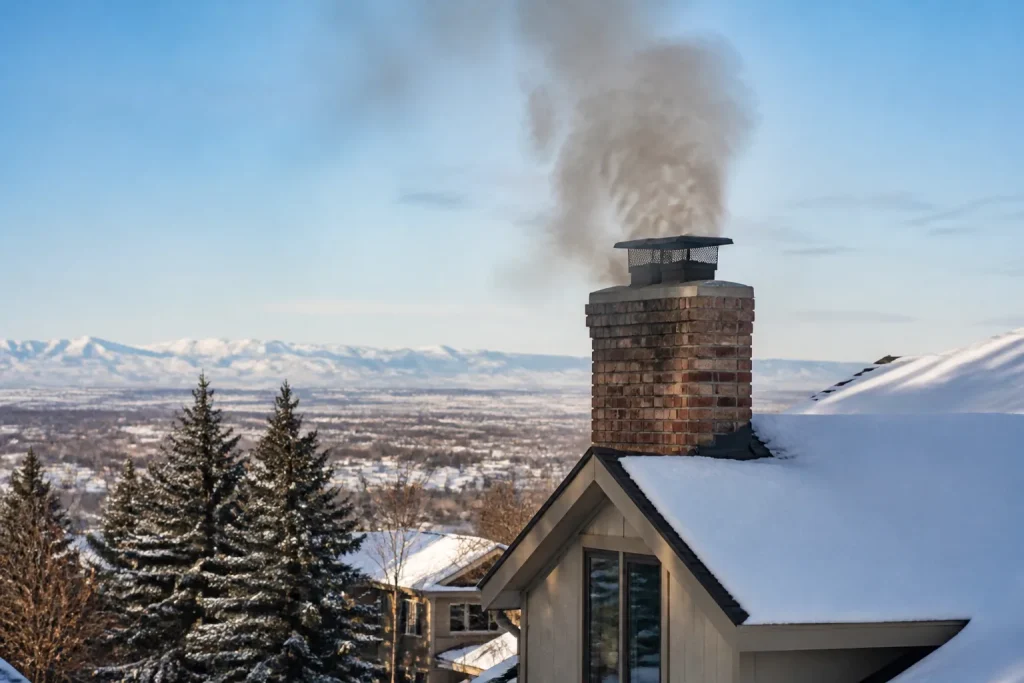
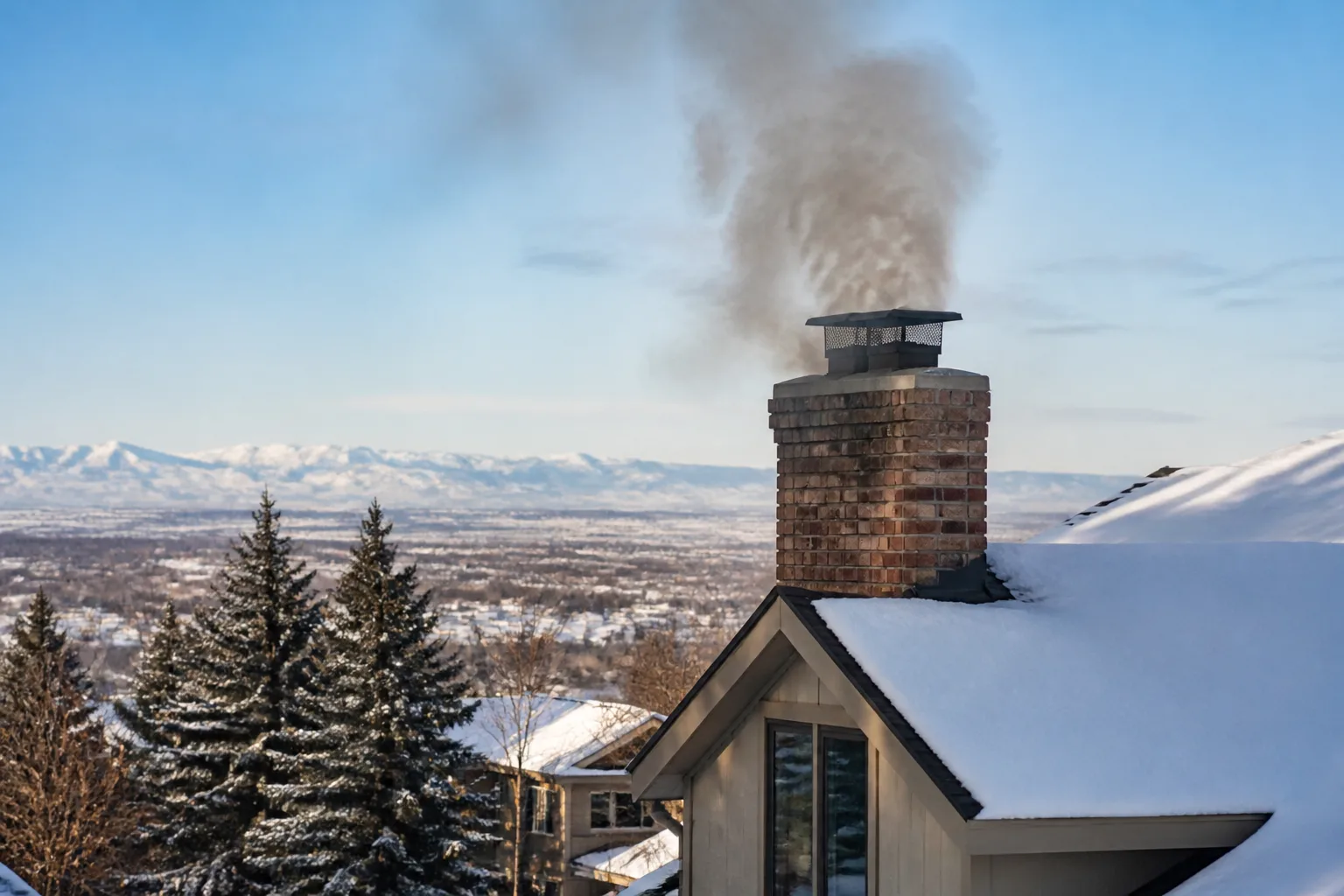
Emergency Chimney Sweep Near Me: What Broomfield Homeowners Should Do First
If you think you’re having a chimney fire, the first two moves are these: get everyone out of the house, then call 911. Close the fireplace doors and the damper only if you can do it without reaching through smoke or flame, and never throw water on a burning chimney. Most people get that second part wrong, and it’s the most damaging mistake you can make in the first few minutes.
If instead you have heavy smoke backing into the room, a sudden draft failure, or a chimney that looks wrong from the driveway, the sequence is different. Keep reading, and if you’d rather have a trained eye on it, call (833) 513-8675.
Why Water Is the Wrong First Instinct in a Chimney Fire
During an active chimney fire, a hot flue is the one thing you don’t want to shock. Pouring water down a burning chimney can crack the liner as it cools suddenly, and in a clay flue that crack may travel the full length. Once the liner is compromised, what started as a contained flue fire can reach the wood framing behind it. You’ve traded one emergency for a worse one.
The counterintuitive move that takes 30 seconds is this: stop the air supply. Open fireplace doors feed oxygen to the fire. So does an open damper. Close both, back away, and call 911. If you can’t safely reach the damper handle, don’t try.
Then stay outside until the fire department clears the house. A chimney fire that “seems out” can still be burning in the flue or the framing, and that’s the difference we cover next.
The Chimney Fire That Self-Extinguishes vs. One Still Burning in the Wall
Lots of chimney fires put themselves out once the creosote that fueled them burns off. Others keep going in places you can’t see. Distinguishing them from outside the home matters, because the second kind is a structural fire until proven otherwise.
Signs that suggest a fire may still be active inside the structure, viewed from outside:
- Smoke seeping from the chimney joints, the cap, or the mortar lines rather than only from the flue opening.
- A hot chimney exterior you can feel from several feet away, especially near the roofline.
- Discolored or blistering siding, or a burnt smell in an upstairs room far from the fireplace.
- Sparks or embers visible at the top of the chimney well after the fire should have died down.
- Popping or roaring sounds heard from the yard.
Any of these is a 911 call, not a sweep appointment. If your chimney looks normal from outside, the fire department has cleared it, and you’re left with a smoky house and questions, that’s when a sweep comes in. A post-fire inspection is not a routine cleaning. It’s a look at what the heat event did to the liner, the flue joints, and the cap.
How to Close Off the Fireplace After a Smoke Event Without Spoiling the Evidence
After a smoke event, your instinct is to clean everything and seal the fireplace so it stops smelling. Wait. What you wipe away is what a technician needs to see to find the cause.
Here’s how we’d handle it if we were the homeowner:
- Let the fire go out completely and give the flue time to cool before touching anything.
- Close the glass doors and the damper, and keep them closed. This limits the smoke smell migrating through the house.
- Don’t scrub the firebox, the flue opening, or the glass. Soot patterns and the locations of the worst staining point to where the problem is.
- Note what you observed before the event: smoke puffing back when you opened the door, a smell that appeared only on windy days, a draft that felt weak. Write it down. That’s information.
- Take photos of the firebox, the damper area, and the outside of the chimney from the ground.
- Don’t relight the fireplace until a technician has looked at it.
That last point bears repeating. A smoke event is the chimney telling you something changed. Lighting another fire is asking it the same question and hoping for a different answer.
What an Emergency Chimney Sweep Actually Does Differently in Broomfield
An emergency sweep call isn’t a faster routine cleaning. The technician arrives with a different agenda: find the cause and confirm the chimney is safe to use at all, before any cleaning happens.
On a call like this in Broomfield, the technician will typically:
- Look at the exterior first: cap, crown, mortar joints, and the flashing where the chimney meets the roof.
- Check draft and look for blockages such as a bird nest, a failed damper, or a collapsed flue tile.
- Run a camera down the flue to see the liner’s actual condition, not just the soot layer on top of it.
- Document what they find with photos so you see what they see.
- Separate what needs fixing now from what can wait.
That last step is where a lot of homeowners get justifiably nervous. Being told you need liner work you can’t verify is a rotten feeling. The answer is simple: nothing gets recommended without camera evidence you can look at yourself. If the flue is sound and only dirty, that’s what you’ll hear. Our technicians have up to 8 years of experience and work with professional-grade materials including DuraFlex and HeatShield, which means a real repair is possible when a real repair is needed, but the findings come first.
Why a Post-Fire Inspection Is More Urgent in Broomfield’s Climate
Broomfield’s freeze-thaw cycles are not gentle on a chimney that just took a heat hit. Water finds its way into small cracks in the mortar and the flue, freezes overnight, expands, and widens them. Then it thaws and the cycle starts over. A hairline crack after a chimney fire can be a real gap in the liner by the end of the season.
That’s why we don’t advise waiting until fall to book the inspection. The damage that matters most happens in the weeks after the event, not the months. The same freeze-thaw pattern affects the crown, the mortar, and the flashing at the roofline, and it’s one of the reasons we treat chimney caps and crowns as part of the whole system rather than an afterthought.
If the flue has deteriorated, a HeatShield ceramic resurfacing can sometimes restore it without a full replacement, which is a real option when the liner is damaged but the structure is sound. A full DuraFlex flexible liner is the alternative when the flue needs rebuilding from the inside. Either way, a sweep visit that ends with a clear diagnosis beats a sweep that never looks.
When to Call a Pro and When You Can Wait a Day
You should call us now if any of these are true:
- You’ve had a chimney fire and it hasn’t been inspected.
- Smoke backs into the room when you light a fire, or the draft feels weaker than it used to.
- You can see soot or staining on the chimney face or the brickwork around it.
- Your carbon monoxide alarm has gone off, or you smell gas.
- Pieces of flue tile or mortar have fallen into the firebox.
You can wait a day, or even book for next week, if the chimney is simply due for a sweep, if you’re seeing a slow buildup of creosote, or if the only issue is a loose cap you’ve spotted from the ground. A dirty chimney is a maintenance call. A chimney that’s misbehaving is something else.
Related services in Broomfield: if the inspection turns up trouble, the same team can handle fireplace repair and chimney repair. That matters. It’s the difference between a report and a resolution.
The Bottom Line
The emergency sequence is simple even when the situation isn’t. Active fire: out of the house, 911, close the doors and damper if you can reach them safely, and never water. Smoke event or suspicion: stop using the fireplace, keep the evidence, write down what you noticed, and get a professional opinion quickly. The freeze-thaw cycle here makes that opinion more time-sensitive than a homeowner in a milder climate would guess.
Any chimney visit with us starts with the evidence, not a sales pitch. We inspect it, we repair it, same team, same standard, and we’ll tell you plainly when work can wait. If you’re in Broomfield and need help, Chimney Sweep Broomfield offers free estimates. Call (833) 513-8675. We answer 24/7. Fast dispatch from 7am to 7pm, Sunday through Friday.
Frequently Asked Questions
A typical chimney sweep in Broomfield runs a modest flat fee, and a post-fire inspection is priced separately from a routine cleaning because it involves camera work and a written report. The price is set per job by the written estimate, and that estimate is free. Call (833) 513-8675 for an exact quote. Estimates are free.
Not always. A chimney fire damages the liner sometimes and leaves it intact other times, and a camera inspection is the only way to know which. If the damage is contained, a HeatShield ceramic resurfacing can restore the flue without a full replacement. If the flue is cracked through, a DuraFlex liner is the durable fix. Either recommendation comes with photos so you can verify it. Call (833) 513-8675 if you’d like an inspection booked.
Small cracks widen through the freeze-thaw cycles, and a compromised liner lets heat and carbon monoxide reach places they shouldn’t. The problem usually shows up later as a smell, a draft failure, or a carbon monoxide alarm, rather than as a sudden catastrophe. Skipping the inspection doesn’t make the damage go away. Call (833) 513-8675 to get it checked before the next fire.
Most wood-burning chimneys need a sweep once a year or roughly every cord of wood burned, whichever comes first, and a chimney that’s had a fire or a smoke event should be inspected right away regardless of the calendar. The only real way to know is to look. Call (833) 513-8675 to schedule a chimney sweep, and start with a Chimney Sweep Broomfield visit if you’re not sure where to begin.
Written by the team at Chimney Sweep Broomfield.
Need Chimney Cleaning Help?
Call Chimney Sweep Broomfield - the local pro we connect you with is licensed and insured, with free written estimates in Broomfield.
(833) 513-8675